Your book. Your constraints.
Define the investable universe, eligible baskets, holding limits and account rules for a scoped asset-selection problem.
PRISM-Q / DISCRETE PORTFOLIO DECISIONS
Explore candidate baskets under your constraints. Refine them with PRISM. Bring back decisions your platform can inspect.
Scope a PRISM-Q pilotBring holdings, targets and constraints into PRISM. Refine weights and proposed trades, then check the resulting allocation.
01 / OPTIMIZE · REBALANCE · VERIFY
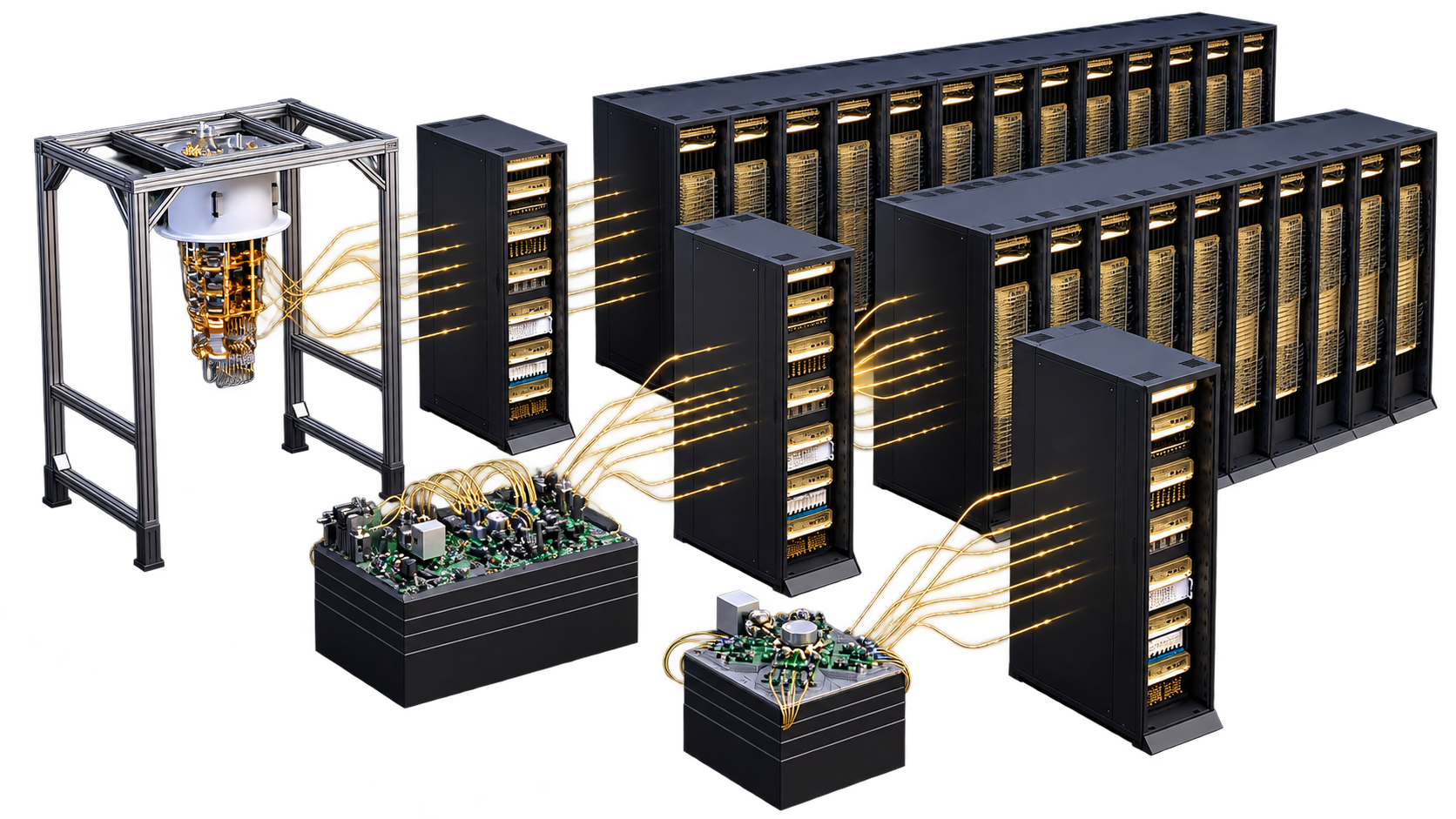
Conceptual architecture · Illustration: NVIDIAPRISM-Q’s simulation workflow is built with NVIDIA CUDA-Q
A WORKFLOW FOR YOUR INVESTMENT PLATFORM
Define the investable universe, eligible baskets, holding limits and account rules for a scoped asset-selection problem.
Explore discrete asset-selection choices through quantum simulation. Pass candidate baskets into classical portfolio optimization.
Check feasibility, risk, tax and trading costs under the agreed model. Inspect the proposed allocation and trades before execution.
SCOPED PILOT & INTEGRATION
Bring a representative portfolio and a discrete selection problem. Together we define the model, classical comparison, acceptance gates and integration output.
Request a PRISM-Q pilot Explore PRISM integration8-week paid pilot · scope and acceptance agreed before kickoff
PRISM-Q’s simulation workflow is built with NVIDIA CUDA-Q. The simulation workflow explores discrete candidate baskets. Candidate baskets return to classical PRISM optimization and checks; the classical decision remains available when a candidate does not meet the agreed acceptance gate.
No physical QPU execution or measured incremental quantum advantage is established. Historical PRISM-Q numerical records do not establish current speed, quality or deadline performance. A scoped pilot evaluates the agreed workflow against its classical reference on quality, feasibility, deadline and cost.
The NVIDIA NVQLink illustration represents a conceptual hybrid compute environment; it is not a photograph of a deployed Asymmetry facility. Moving trade tickets, candidate rows, weights and timings are explanatory animation; no PRISM solver, CUDA-Q simulation, physical QPU or market order executes in this page.